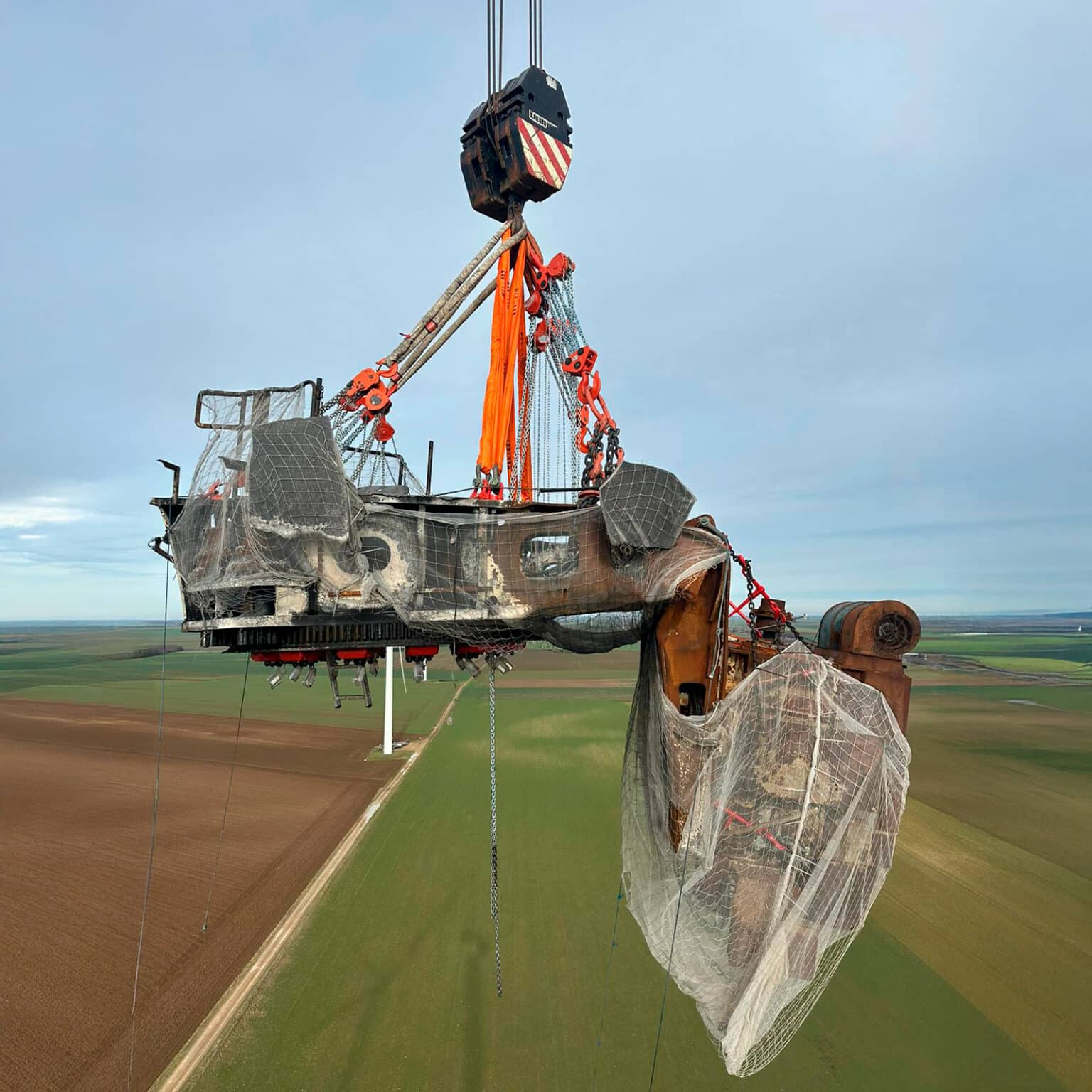
Emergency wind turbine repair becomes essential when wind turbines can no longer be managed through standard maintenance or service procedures. In these situations, the structural integrity, operational stability, and safety of the turbine are often compromised. Events such as nacelle fires, overspeed incidents, blade failures, or partial structural collapse require immediate and highly specialized intervention.
Unlike routine maintenance, emergency wind turbine repair demands a combination of advanced engineering analysis, field expertise, and controlled execution. MDWind has developed a structured methodology specifically designed to address these complex scenarios, based on more than 16 years of experience in managing severely damaged wind turbines.
Emergency wind turbine repair is typically required when conventional service approaches are no longer sufficient or applicable. This is often the case when:
Common damage scenarios include:
In such situations, standard maintenance methods are no longer viable. Instead, each intervention must be specifically engineered based on the actual condition of the turbine, ensuring both technical feasibility and operational safety.
A controlled and methodical approach is essential when dealing with complex turbine failures. MDWind applies a four-step methodology to ensure full control over high-risk operations and to maintain consistency between engineering analysis and field execution.
The first phase focuses on establishing a clear and accurate understanding of the turbine’s condition. This step is critical, as all subsequent decisions depend on the quality of the initial assessment.
This includes:
The objective is to determine the structural status of the turbine and identify potential risks before defining any intervention strategy. Accurate data at this stage helps avoid incorrect assumptions that could increase risk during execution.
Once the initial assessment is complete, a detailed engineering evaluation is carried out. Damaged wind turbines often exhibit altered load paths, weakened structural components, or unstable configurations.
As part of emergency wind turbine repair, this phase includes:
These analyses make it possible to identify potential failure modes in advance. Based on the results, lifting strategies, safety procedures, and protective measures are defined and adapted to the specific situation.
This phase ensures that all planned actions are technically justified and that risks are reduced to an acceptable level.
After the engineering behavior of the turbine is fully understood, a detailed execution plan is developed. This phase translates technical findings into a structured and operational framework.
It includes:
A clear and precise method statement is essential in any emergency wind turbine repair project. It ensures alignment between engineering assumptions and field operations while minimizing uncertainty during execution.
The execution phase is carried out strictly according to the defined methodology. Given the instability of damaged structures, precision and control are critical.
Key elements include:
Continuous monitoring is required throughout the process, as conditions may evolve during operations. Teams must be able to adapt in real time while remaining within the defined safety framework.
Recycling is also integrated into the process. Materials are separated, handled, and processed in accordance with environmental regulations, ensuring a responsible approach to dismantling.
A key factor in successful emergency wind turbine repair is the integration of engineering analysis into real-world operations. MDWind combines advanced technical tools with field expertise to improve decision-making and execution.
This includes:
These tools allow teams to anticipate constraints and risks before work begins on site, increasing predictability and operational control.
Managing damaged wind turbines involves a high level of uncertainty. Hidden structural damage, environmental conditions, and component instability all contribute to operational risk.
Within emergency wind turbine repair, a structured risk management approach is essential:
This proactive approach ensures that risks are identified early and managed effectively, rather than reacting to unexpected failures during execution.
All activities related to emergency wind turbine repair are conducted in accordance with internationally recognized standards. MDWind operates within established frameworks to ensure consistency, safety, and environmental responsibility.
These include:
These standards provide a structured basis for maintaining quality and safety across all project phases.
Every emergency wind turbine repair project presents unique challenges that must be carefully managed. These include:
A structured and engineering-driven methodology is essential to address these constraints systematically and maintain full control throughout the operation.
Emergency wind turbine repair is a highly specialized field that goes far beyond conventional maintenance. When standard procedures are no longer applicable, a combination of engineering expertise, structured planning, and controlled execution becomes essential.
MDWind provides a clear and reliable framework for handling complex turbine damage scenarios. By integrating advanced engineering analysis with practical field expertise, MDWind enables safe, efficient, and controlled interventions even under the most challenging conditions.

From common to complex situations, MDWind is your strategic partner on the lifespan of your turbines, by delivering sustainable, efficient and long-term solutions.