PES: Matthieu, before founding MDWind, you built extensive technical experience within the wind industry. How did your early experiences shape your decision to create MDWind and what vision were you aiming to bring to the market?
Matthieu Dessailly: I started my career as an assistant site manager and spent years working on installation sites alongside technicians, crane teams and project crews. Those years taught me that behind every successful project are people who bring their skill, judgement and commitment to the work, often in difficult conditions.
No individual delivers a project alone. It depends on people trusting one another, sharing their experience and taking responsibility together.
At the time, skilled technicians were too often seen simply as labour rather than as professionals whose expertise deserved recognition. I wanted to build a company where people are respected for what they know, given opportunities to grow and able to see a long-term future for themselves.
That principle remains central to MDWind today. Our strength comes from the technicians onsite, the project teams preparing each operation and everyone who contributes to building and passing on our collective expertise.
PES: Since its foundation, MDWind has evolved alongside the wind energy sector itself. Looking back, what have been the defining milestones that transformed the company into the organisation it is today?
MD: Many of the defining moments in the company’s history came from changes in the market. People sometimes look back and assume everything followed a master plan. It didn’t. We were thrown into the river and we learned to swim.
We had to adapt, make difficult decisions and keep moving forward. That required resilience, but also the courage to change direction when circumstances demanded it.
Five moments stand out. First, founding the company itself, by far the hardest step. Second, our first installation project for Nordex. Third, our first Senvion project, which remains one of the toughest we have delivered. Fourth, the Senvion insolvency in 2019, which forced us to rethink the business. Fifth, our decision in 2023 and 2024 to move away from installation and focus on specialist services.
That choice marked the beginning of a new chapter for MDWind, focused on complex interventions where our experience creates the greatest value for customers.
Looking back, entrepreneurship often felt like jumping off a cliff and building the parachute on the way down. We didn’t control every challenge that came our way, but we always tried to adapt, keep moving forward and find solutions. That mindset has shaped who we are today.
PES: MDWind today offers a range of specialised wind turbine services, with an increasing focus on areas such as major component replacement, dismantling and recycling. What strategic considerations are driving this positioning?
MD: The market itself drove this decision. We observed declining installation activity in several regions while wind fleets continued to age. That creates both challenges and opportunities.
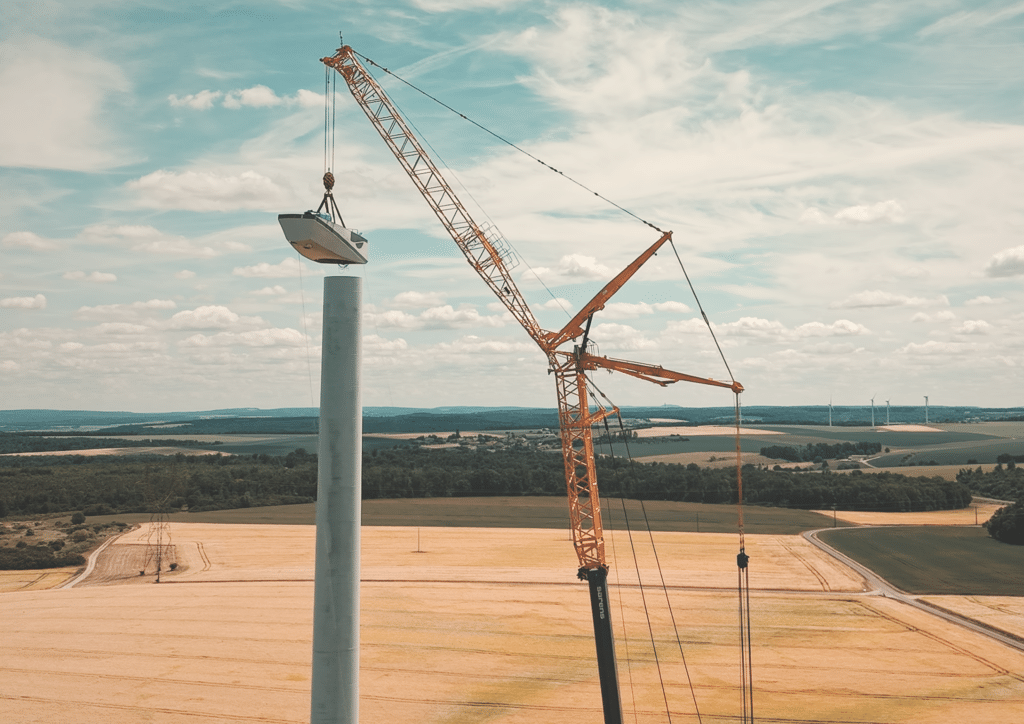
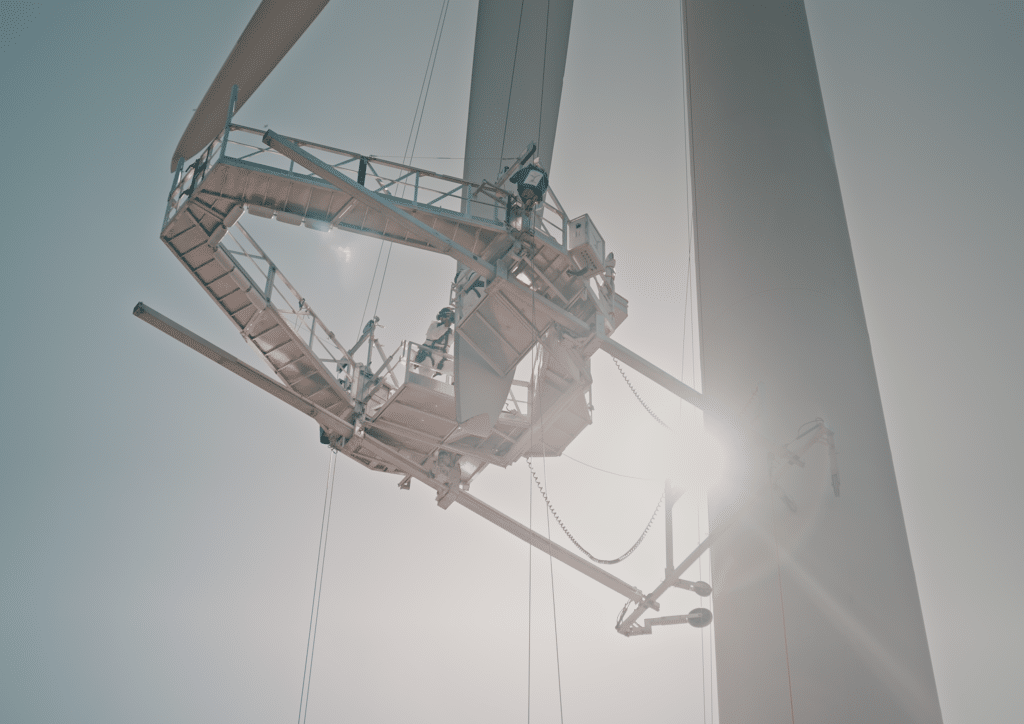
We realised that our strongest opportunities were in areas where we had built deep technical experience, particularly major component replacement (MCR), dismantling, life extension and non-standard specialist interventions.
Rather than moving into entirely new activities, we chose to focus on the areas where we had developed the strongest expertise over many years.
A recent example is the dismantling of five Nordex Beta turbines, including the recovery and recycling of dismantled materials and components. Projects like this demonstrate how the industry is increasingly moving beyond installation towards lifecycle management, circularity and responsible end-of-life solutions.
For us, the question wasn’t how to diversify, but where to focus. MCR, dismantling and specialist interventions had long been part of our DNA. As the market evolved, these activities became increasingly important because they bring together technical expertise, specialist tooling and practical field experience.
The future will increasingly favour companies capable of solving complex technical challenges rather than simply providing labour.
PES: How would you describe the company’s core competencies and what differentiates your approach from other service providers?
MD: Earlier in our history, we were often recognised for reacting quickly when unexpected challenges arose. Today, our focus has shifted towards anticipation: understanding risks, preparing methodologies and planning projects in detail before execution begins.
Beyond technical expertise itself, our differentiator lies in managing complex projects end-to-end, from methodology development and engineering through to logistics, specialist tooling, equipment planning and site execution.
The objective is to reduce uncertainty and improve decision-making before work begins.
This is particularly important on Senvion and Nordex platforms, where repeated experience helps teams anticipate constraints faster and develop safer methodologies.
PES: How do you prepare for technically demanding or high-risk operations, including fire-damaged turbines?
MD: Everything begins with anticipation. For us, a project shouldn’t start when technicians arrive on site. It starts much earlier, when the challenge is identified and the risks are assessed.
Project management, together with site teams and technicians, plays a central role in this process.
We prepare projects in depth, evaluating technical constraints, resources, logistics and potential risks well in advance. Technical solutions are important, but they come only after the risks and operational constraints have been properly understood.
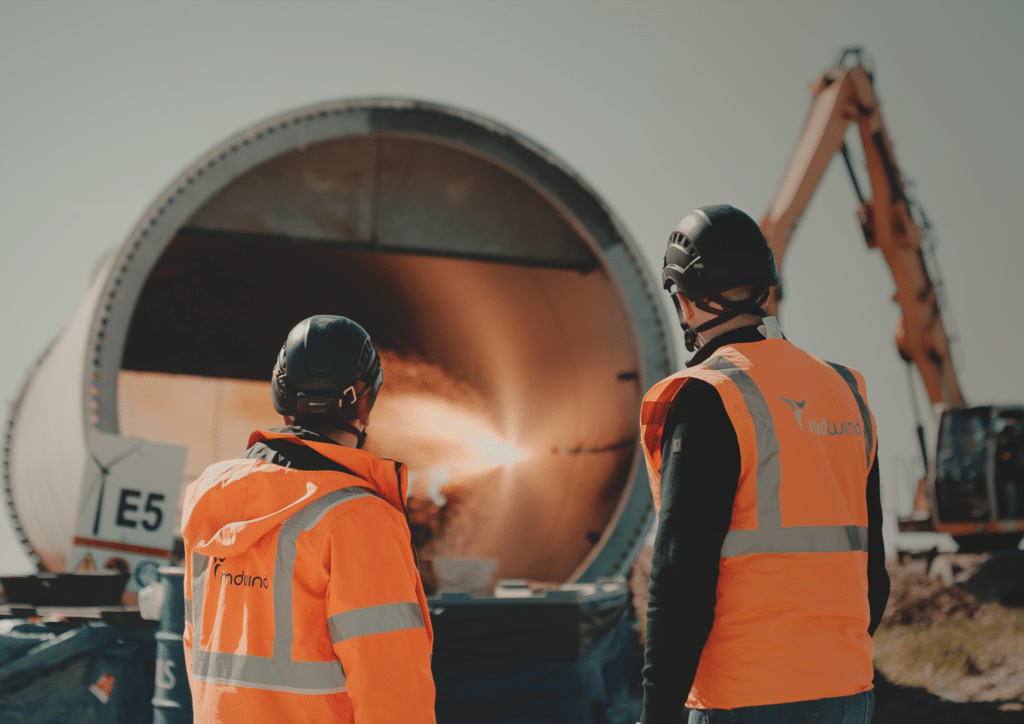
Over the years, we have dismantled several fire-damaged turbines. No two situations are the same: the extent of structural damage, site constraints and safety risks vary from one project to another.
This means methodologies must be adapted carefully, with experienced teams and detailed preparation playing a critical role.
Ultimately, our goal is simple: reduce uncertainty, develop a safe methodology and ensure the project is fully understood before execution begins.
PES: In an increasingly competitive market, how do you create long-term value for asset owners?
MD: Quality creates value. In a price-driven market, services can easily be reduced to labour and equipment. However, asset owners ultimately care about performance, reliability and long-term results.
A wind turbine is an industrial asset. Like any industrial asset, it requires proper maintenance if it is expected to operate reliably for 20 years or more.
Poor decisions today often become expensive problems tomorrow.
Our focus is always on the final result. We want clients to know what level of quality they can expect and to trust that work will be completed correctly.
The real value lies not only in completing the task, but also in helping asset owners prevent future problems, respond effectively when unexpected issues arise and maintain the reliability and long-term value of their assets.
PES: How do you see life extension, dismantling and circularity shaping the future market?
MD: One advantage of focusing on existing fleets is visibility. We know where turbines are located, how old they are and which technologies are operating. That gives us a clearer view of future demand than the installation market.
We believe life extension will play an increasingly important role. In many cases, repairing or replacing key components is more economical and sustainable than replacing a turbine entirely.
We often compare wind turbines to aircraft. Many aircraft remain in service for decades because major components are maintained, refurbished or replaced when necessary. The same principle increasingly applies to wind turbines.
Circularity is a hierarchy. First, extend the life of the turbine. Then reuse components wherever possible. Only recycle when no better option exists.
PES: From a broader industry perspective, what challenges must the wind sector address as Europe’s fleet continues to age?
MD: The industry must remember that wind turbines are industrial assets, not simply financial assets.As the fleet ages, the challenge is no longer only to install new capacity, but also to maintain a wide range of existing technologies over the long term.
In every mature industrial sector, maintenance is recognised as a fundamental part of long-term performance. The wind industry must develop the same approach while also dealing with older platforms where spare parts, technical documentation and manufacturer support may become increasingly difficult to access.
If we expect turbines to operate safely and efficiently for 20, 30 or even 40 years, maintenance cannot be viewed purely as a cost.
It must form part of a broader lifecycle strategy that includes major repairs, life extension, component reuse and, when the time comes, responsible dismantling.
Reliability is rarely the result of luck. It is usually the consequence of consistent maintenance, technical expertise and informed decisions throughout the life of the asset.
Our role is to bring the experience, judgement and commitment of our teams to asset owners when they face difficult decisions, helping translate those decisions into reliable solutions onsite.
PES: Finally, what is your vision for MDWind over the next decade?
MD: The projects that motivate us most are those that challenge conventional thinking. Some of the most valuable moments are when a client comes with a difficult problem and simply asks: ‘What would you do?’
Looking ahead, I see significant opportunities in life extension, specialist repairs, dismantling and circular economy solutions. The European fleet is ageing and the market continues to evolve rapidly.
More than anything, I believe the future will belong to companies that remain agile, resilient and willing to challenge established assumptions.
That also depends on the people behind the projects: technicians, project managers and support teams who turn preparation into reliable execution.
For MDWind, the objective is simple: to continue building our expertise, solving complex problems and finding practical solutions that create lasting value for our customers.
From common to complex situations, MDWind is your strategic partner on the lifespan of your turbines, by delivering sustainable, efficient and long-term solutions.